Last updated November 23, 2026
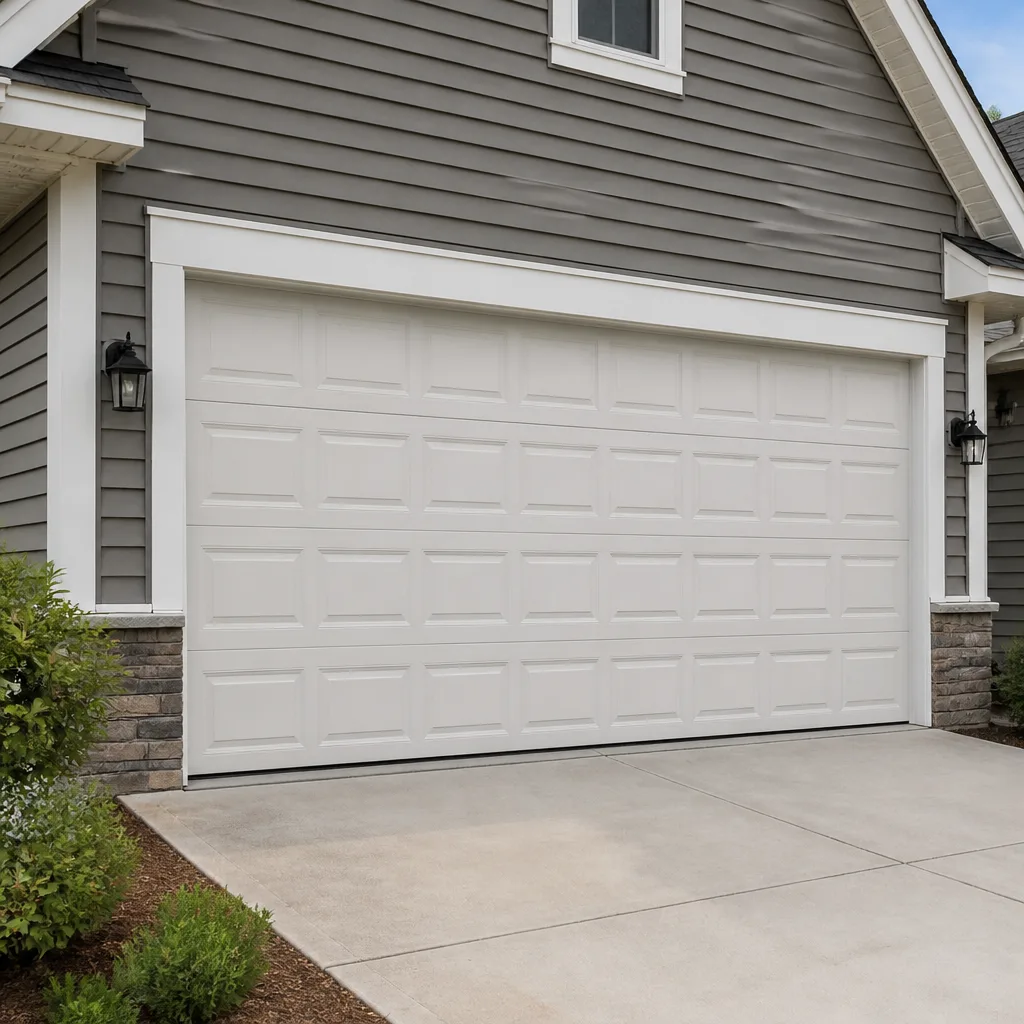 Raised-panel steel
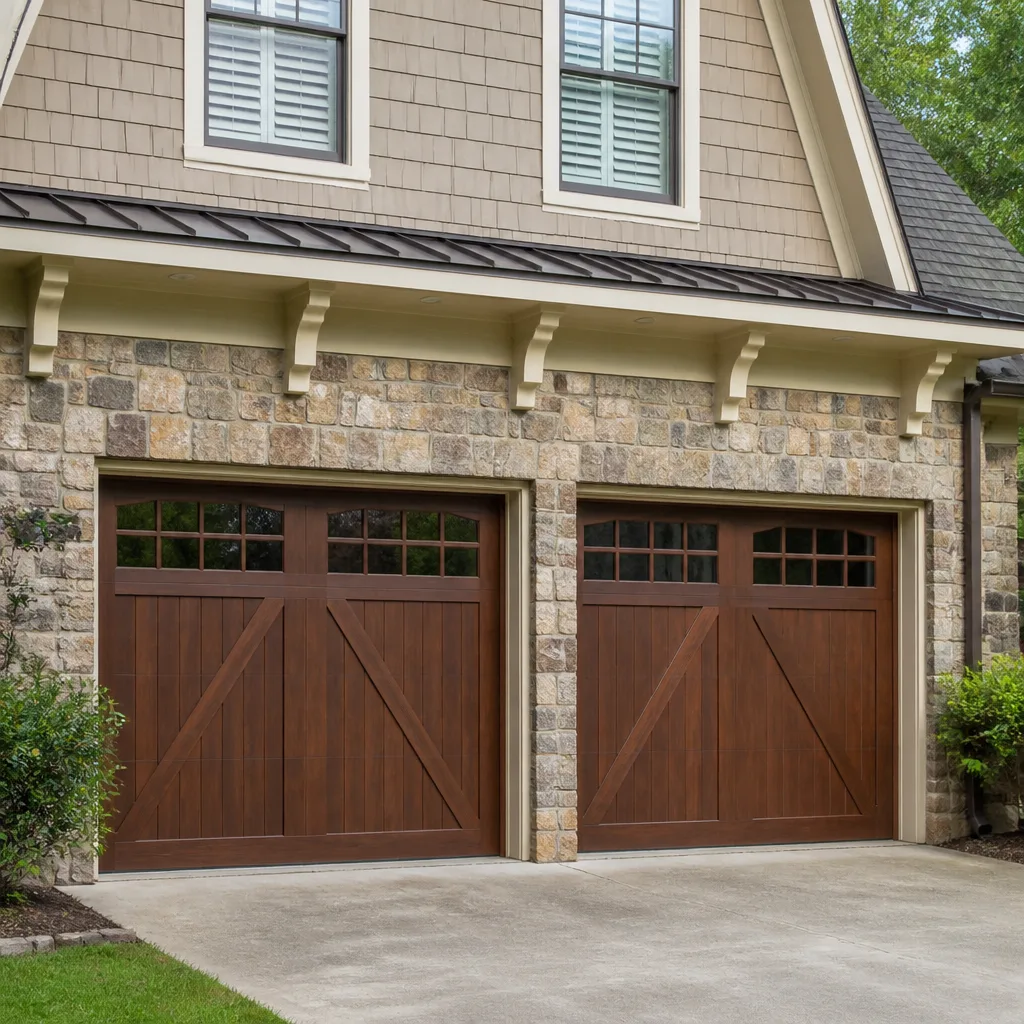 Carriage house
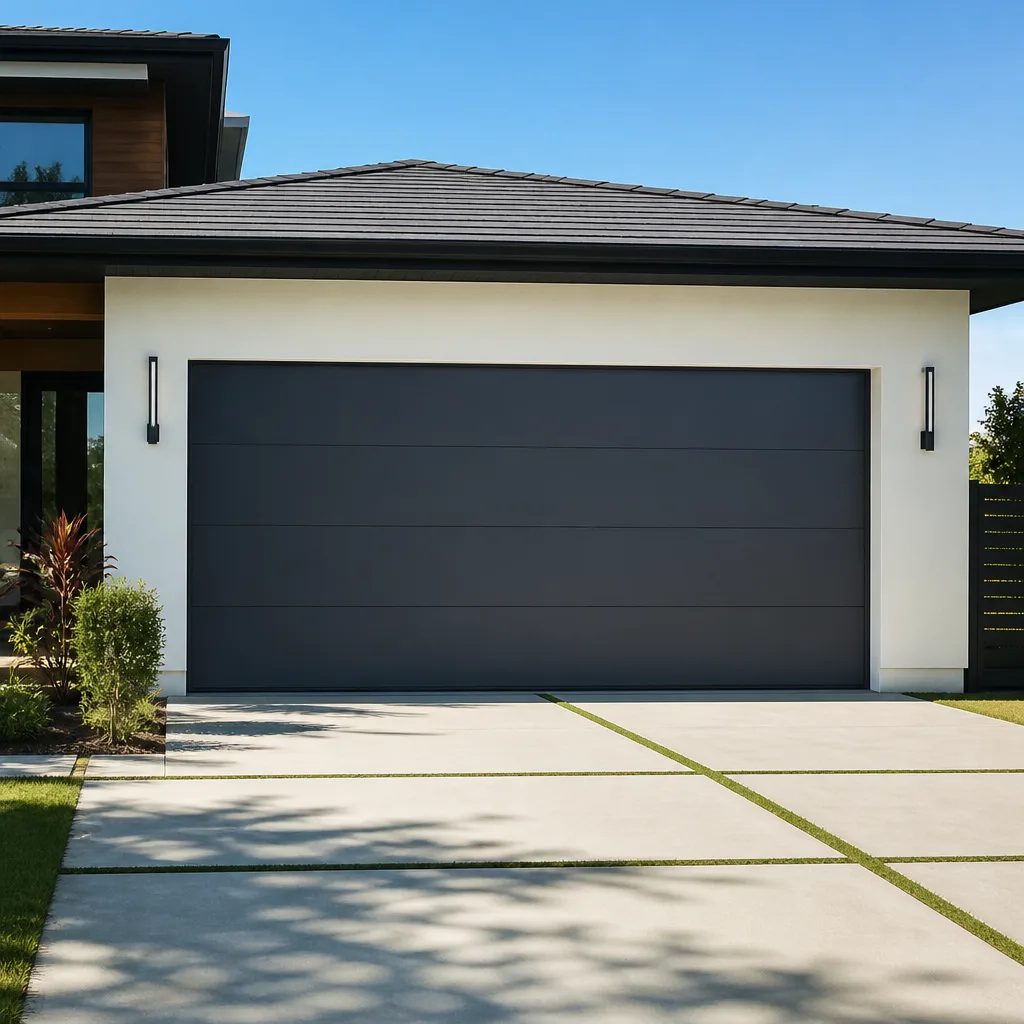 Modern flush
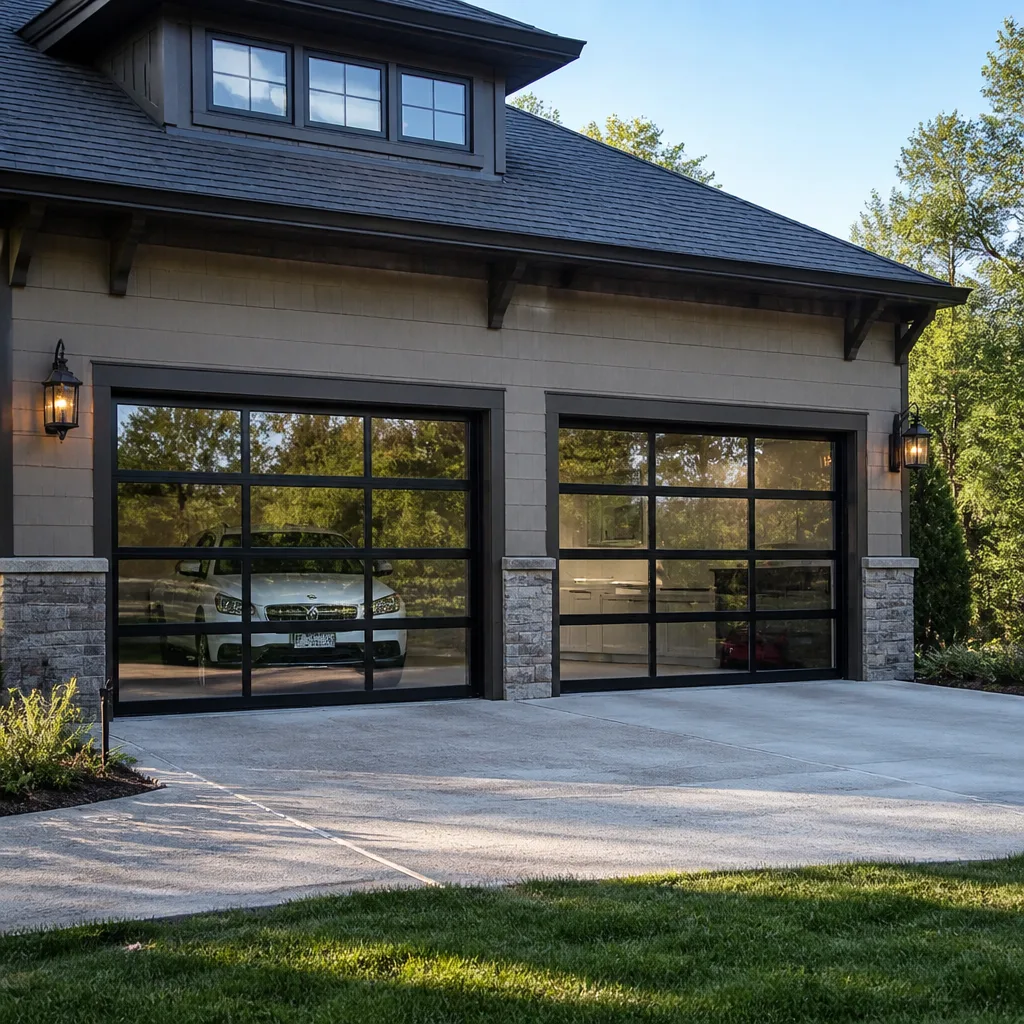 Full-view glass
 LiftMaster openers
 Chamberlain openers
Full 25-point door and opener safety check with every visit - springs, cables, rollers, tracks, and your LiftMaster or Chamberlain opener included
You get a price before we start. It does not change when the pro arrives.
Get your free estimateGarage Door Warning Signs: A Valley Stream Homeowner’s Reference Guide
Most homeowners lump every garage door complaint into one bucket: “it’s making a weird noise.” That’s a mistake, because the noise is the whole point. A grinding sound and a scraping sound can come from the same door on the same morning and point to two completely different failures – one is a roller issue you can watch for a while, the other is a cable jumping its drum that needs same-day attention before something snaps. In this guide we’ll walk through how to read your door’s sounds, movements, and visual cues like a diagnostic language. You’ll learn which signs mean schedule an appointment, which mean stop using the door today, and which are purely cosmetic. Everything here applies to the doors we see across Valley Stream, from the older single-car doors near the village green to the double-wide setups off Sunrise Highway.
Quick Answer
The most important garage door warning signs in Valley Stream are a door that runs unevenly (one side visibly lower), a cable that looks slack or has come off its drum, springs with a visible gap or stretch, and any grinding or scraping that starts suddenly. Grinding usually points to rollers or a lack of lubrication and can often wait for a scheduled visit; scraping, popping, or a door that reverses on its own usually means stop operating it and call for repair. When in doubt, keep the door closed, don’t force it, and get a professional diagnosis before using it again.
Styles & brands we work with
- Raised-panel steel
- Carriage house
- Modern flush
- Full-view glass
- LiftMaster openers
- Chamberlain openers
Table of Contents
- The Sound Diagnostic: What Each Noise Is Telling You
- Visual Signs on Springs and Cables You Can Check Safely
- Why an Uneven Door Is Never Cosmetic
- Reading Your Opener’s Behavior
- Schedule vs. Stop: Sorting the Warning Signs
- How Valley Stream Weather Tests Your Door
- What Older Valley Stream Homes Do to Garage Doors
- When Not to Touch It Yourself
The Sound Diagnostic: What Each Noise Is Telling You
Your ears are the fastest diagnostic tool you have, and they’re free. The trick is learning to separate the sounds, because they come from different places in the door system. Here’s how we break down the five noises we hear most often on Valley Stream doors.
Grinding sounds harsh and gritty, almost metallic, and it usually comes from the rollers moving through the track. It often means a roller bearing has worn out or the track has a burr the roller is dragging against. Grinding that starts gradually is usually a monitor-and-schedule situation; grinding that appears after a cold snap often means a hardened roller or dry hinge. In most cases you can keep using the door while you plan the repair, but don’t ignore it indefinitely.
Scraping is different. Scraping is a continuous metal-on-metal or metal-on-wood sound, and it frequently comes from a cable that has jumped its drum or a panel rubbing the frame. That’s the sound that means stop. A cable out of its drum can come loose suddenly, and a door hanging on one tensioned side is a genuine safety hazard.
Popping comes in two flavors. A single loud pop while the door is opening or closing often signals a spring that’s about to fail or a torsion spring that has just broken. Repeated popping along the track usually points to a roller that’s catching or a hinge that’s working loose. Treat a sudden pop during operation as a stop signal until you know which one it is.
Rattling is the mildest of the group. It’s almost always loose hardware – hinges, brackets, or the track mounts – and while it sounds alarming, it typically lets you schedule a repair visit rather than halt the door.
Squealing is the classic lack-of-lubrication sound. It comes from rollers, hinges, and the torsion bar, and it’s the most forgiving of all the noises. It’s also a good reminder that the door has moving parts that want attention now and then. If the squeal turns into a grind, that’s your cue to move from a routine call to a sooner one.
For a full walkthrough of what each repair involves, our Valley Stream Garage Door Repair Pros team can help you match the sound to the fix.
Visual Signs on Springs and Cables You Can Check Safely
Before you look at anything, understand that springs and cables are under extreme tension. This is not a DIY inspection zone. What we mean by “check your springs” is a look from several feet back, with the door closed and the opener disconnected from your judgment. Never reach into the door’s path or touch the hardware to “see if it’s loose.”
Here’s what to look for from a safe distance:
- A gap in a torsion spring. Torsion springs (the horizontal ones above the door) develop a visible gap between the coils when they fail. A spring with a gap is broken, full stop, and the door should not be operated.
- A stretched extension spring. Extension springs (running along the sides of the track) look noticeably longer and looser when they’ve stretched or failed. That’s a stop-operating sign too.
- A slack or off-drum cable. Cables should sit neatly in their drum at the top corner of the track. If a cable looks loose, kinked, or draped off the drum, don’t run the door.
- Bent track sections. A dented or bent vertical or horizontal track forces the rollers to fight the frame, and that’s a common cause of the grinding we described above.
- Rust or buildup on the torsion bar or hinges. Surface rust isn’t urgent, but it tells you the door has been running dry and wants lubrication.
- Sagging panels. A bowed top section or a panel that dips in the middle can bind the door on the way up.
Because springs carry so much stored energy, spring work is a specialized job, and we treat it that way – it’s the one part of the system where a small mistake can cause real injury. If you see any of the signs above, stop using the door and call for a diagnosis. Our garage door spring repair service is built around exactly these calls.
Why an Uneven Door Is Never Cosmetic
A garage door that’s higher on one side than the other looks like a small, annoying quirk. It isn’t. When one side of the door lags behind the other, the whole door is fighting itself on every cycle, and something in the mechanism is already failing. Homeowners often ignore this sign for months because the door still opens and mostly closes, and that’s exactly how a small problem becomes a much bigger repair.
Here’s what an uneven door usually means mechanically:
- A cable that has slipped or stretched. If one cable is longer or has come partly off its drum, that side of the door rides lower. This is the most common cause and the one to rule out first.
- One spring doing more work than the other. Extension springs come in pairs; if one has lost tension, the door tilts toward that side.
- A bent or misaligned track. If one track has shifted, the rollers on that side ride at a different height, and the door follows.
- Worn rollers on one side. A blown roller on one side changes the geometry just enough to tilt the door.
- A warped or cracked panel. Panels flex over time, and a single warped section can throw the door off level.
The safe way to check is simple: close the door, step back to the middle of the driveway, and eyeball the gap between the bottom of the door and the floor on both sides. If one side sits noticeably higher or the gap is uneven, treat it as an active fault. A door that runs lopsided will eventually wear the springs unevenly, stress the opener rail, and can jump a track – and if a homeowner keeps running it in that state, the next sign is often the door seizing mid-cycle. If you’re seeing this at home in Valley Stream, don’t keep cycling the door while you wait for an appointment. Close it, disconnect the opener if it’s safe to do so, and get it looked at.
Reading Your Opener’s Behavior
Your opener is half of the diagnostic story. The door tells you about the physical hardware; the opener tells you about the electrical and mechanical state of the motor system. A lot of Valley Stream homeowners assume a bad opener when the real problem is the door, and vice versa. Running through these signals will help you avoid that confusion.
Slow operation. If the door has gotten noticeably slower over time, that usually isn’t the opener failing – it’s the door getting harder to move. Worn rollers, a dry torsion bar, or a slightly misaligned track all add drag, and the opener slows down because it’s doing more work. Slow-and-struggling is a hardware signal, not a motor signal.
Reversing unexpectedly. A door that goes partway up and comes back down, or goes down and bounces back up, is telling you the safety sensors are blocked, misaligned, or the opener’s force settings have drifted. Before you call, check that nothing is in front of the sensors at the bottom of the tracks – a leaf, a cobweb, or a slightly bumped sensor can cause this. If it keeps happening after a clean check, the opener or the door is out of adjustment.
Running but not moving the door. If you hear the motor spin and nothing happens, the opener has likely stripped its internal gear, or the door’s torsion bar has broken and the motor is spinning against no load. Both are stop-operating signs. Don’t keep pressing the button – you’ll just wear the opener further.
Lights flashing but no movement. This is usually a sensor or wiring fault, not a door problem. It’s also typically a quick fix.
When the opener is the problem, our garage door opener repair service covers the full range, from LiftMaster and Chamberlain units to older Craftsman systems still running strong. We also work on Raynor and Wayne Dalton openers when you’re not sure what you have.
Schedule vs. Stop: Sorting the Warning Signs
The single most useful habit you can build is learning to sort warning signs into two piles: schedule an appointment and stop using the door today. Getting this wrong in either direction is a problem – you either risk a dangerous failure or you panic over a hinge.
Here’s how we sort them.
Schedule a repair (the door can still run)
- Gradual grinding from the rollers
- Rattling from loose hinges or brackets
- Squealing that stops after a lubrication
- Slow opening or closing with no lag on one side
- Bent track that isn’t causing the door to bind
- A door that’s slightly noisy but still runs level and steady
Stop operating the door (call today)
- Spring with a visible gap or stretch
- Cable that’s slack, kinked, or off its drum
- Door higher on one side and getting worse
- Loud pop during operation followed by no spring tension
- Door running but not moving, with the motor spinning
- Door reversing or bouncing on its own repeatedly
- Door stuck open with the car inside
If you’re in the second list, close the door if you can do so safely, keep vehicles out of the garage if possible, and call for emergency service. We offer garage door repair and same-day emergency response for exactly these situations, and it’s the reason our emergency line exists rather than being an add-on.
How Valley Stream Weather Tests Your Door
Valley Stream’s climate is hard on garage doors in a few specific ways, and the warning signs you notice in February often have their roots in a swing of temperature or a wet stretch. When the mercury drops, metal contracts. Springs that were on the edge of their life can fail on the coldest night of the year, which is why a sudden pop during a cold snap is so common. Lubrication thickens in the cold, too, which is why grinding and squealing often get noticeably worse in winter and quiet down again in spring.
The freeze-thaw cycle is the other big factor. Water gets into small gaps around the door frame, the bottom seal, and the hardware, and when it refreezes it expands. That expansion can slightly shift a track, loosen a bracket, or crack a section of a wood door. Valley Stream sees enough of this cycle over a season that we’re not surprised when we find a door that’s developed a low-side lag after a wet stretch.
Summer brings its own test. Heat and humidity can warp a wood door over time and soften the bottom seal so it doesn’t sit against the floor the way it should. If your weatherstripping is compressed or cracked, you’ll notice daylight along the bottom, which is both an energy issue and an invitation for water to get in.
The practical takeaway: check your door’s sounds and alignment at the start of every season. A five-minute look in fall and early spring catches most of the weather-related warnings before they become emergency calls.
What Older Valley Stream Homes Do to Garage Doors
A lot of the housing stock in Valley Stream predates the modern garage door. The Village of Valley Stream has neighborhoods with detached garages, tight single-car doors, and additions that were built onto the original house decades after the fact. When we’re looking at a warning sign, the age and style of the garage often tell us what to expect before we even open the panel.
Here’s the pattern:
- Original doors in older homes often have extension springs, not torsion springs. Extension springs are the ones that run along the sides of the track and are the most reactive to a single failure. That’s why a sagging door on one side in an older Valley Stream garage is so often an extension-spring issue.
- Garages added onto the house may have doors on a frame that was never built for a modern door’s weight. That means binding, shifted tracks, and panel rubbing are more common.
- Tight single-car doors in the older sections of the village put more stress on hardware. The door cycles faster, the springs do more work, and the rollers wear faster.
- Homeowners who upgraded to a modern door often have an older opener. That’s where we see the mismatch: a heavier door paired with a lighter-duty opener, running slow and struggling. Whether you have a LiftMaster, Genie, or an older Craftsman, it’s worth checking the opener’s rating against the door’s weight.
We’ve been called out to doors in Valley Stream where the failure was visible the moment the panel came up, but the homeowner had been running the door for months because the noise was gradual. The pattern above is a good mental checklist before you call: a door that’s been running fine in a house of a certain age doesn’t suddenly fail without having left some trace along the track.
When Not to Touch It Yourself
We say this with care, because the homeowners who call us are usually capable, handy people. But garage doors have two components that carry stored energy in a way that most home repairs don’t: the springs and the cables. A torsion spring under tension is roughly the equivalent of a loaded spring on a piece of heavy equipment – it doesn’t just break when it fails, it can snap back with enough force to cause serious injury.
So the rule of thumb is simple:
- Don’t touch springs or cables. Even with the door closed and the opener disconnected, springs hold tension. Spring and cable work is a trained-technician job.
- Don’t reach into the door’s path. It’s tempting to test a hesitation in the door by putting a hand on it. Don’t.
- Don’t force a stuck door with a pry bar. A stuck door is a symptom, not a cause. Forcing it can break a panel or jump a track.
- Don’t keep cycling the door to “see if the noise goes away.” That’s the single most common way a scheduled repair becomes an emergency repair.
- Do check the sensors, the rollers, and the track for obvious debris. Sensor alignment, a leaf in the track, and a loose bolt are all safe to look at from the outside.
- Do call a specialist for anything spring, cable, or opener related. Diagnosing accurately and fixing it right is the whole job.
We can’t tell you how many emergency calls we get on doors where the homeowner had been hearing a warning for a week. Getting the diagnosis right on the first visit is the goal, and it’s much easier when the door hasn’t been forced through another hundred cycles first.
Common Mistakes to Avoid
- Treating every noise as the same. Grinding and scraping point to different components and different urgency. Matching the sound correctly is half the diagnosis.
- Ignoring an uneven door for months. A lopsided door is almost always a cable, spring, or track failure in progress. Running it while you “see if it sorts itself out” makes the eventual repair bigger.
- Using a door with a broken spring because it still opens. A door with one good spring and one broken spring can be pulled by the opener, but the hardware is under dangerous uneven load. Stop.
- Assuming every problem is the opener. A slow, struggling door is usually a hardware issue. Replacing the opener on a door with a bad track wastes money.
- Greasing everything. Lubrication is good for rollers, hinges, and the torsion bar, but it isn’t a substitute for diagnosing a worn part. And it should be a light, proper lubricant, not whatever is in the garage.
- Adjusting spring tension yourself. Springs are the one part of the door where an error is dangerous. Leave this to a trained technician.
- Ignoring water intrusion on the bottom seal. In Valley Stream’s freeze-thaw season, a worn bottom seal lets water get in, and water in the frame is what starts the slow shift of a track.
See the difference
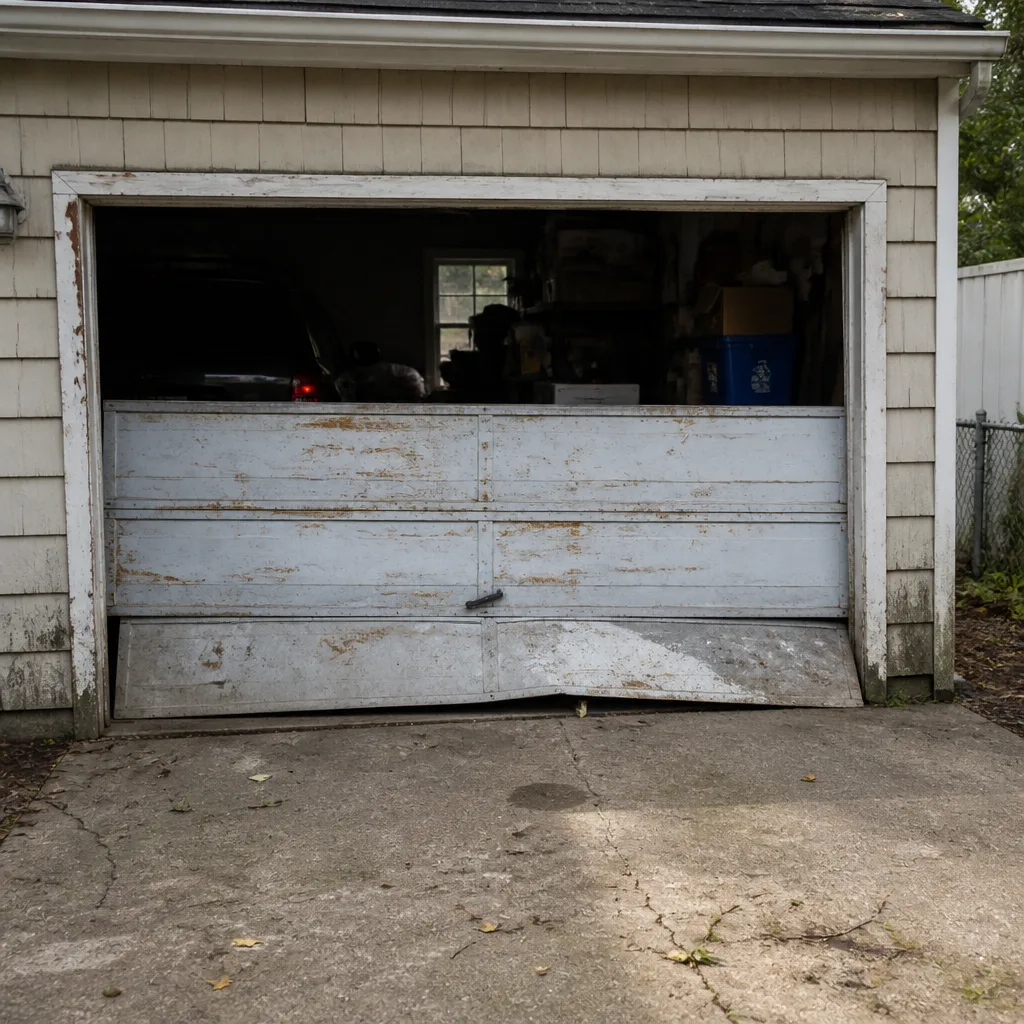 Before
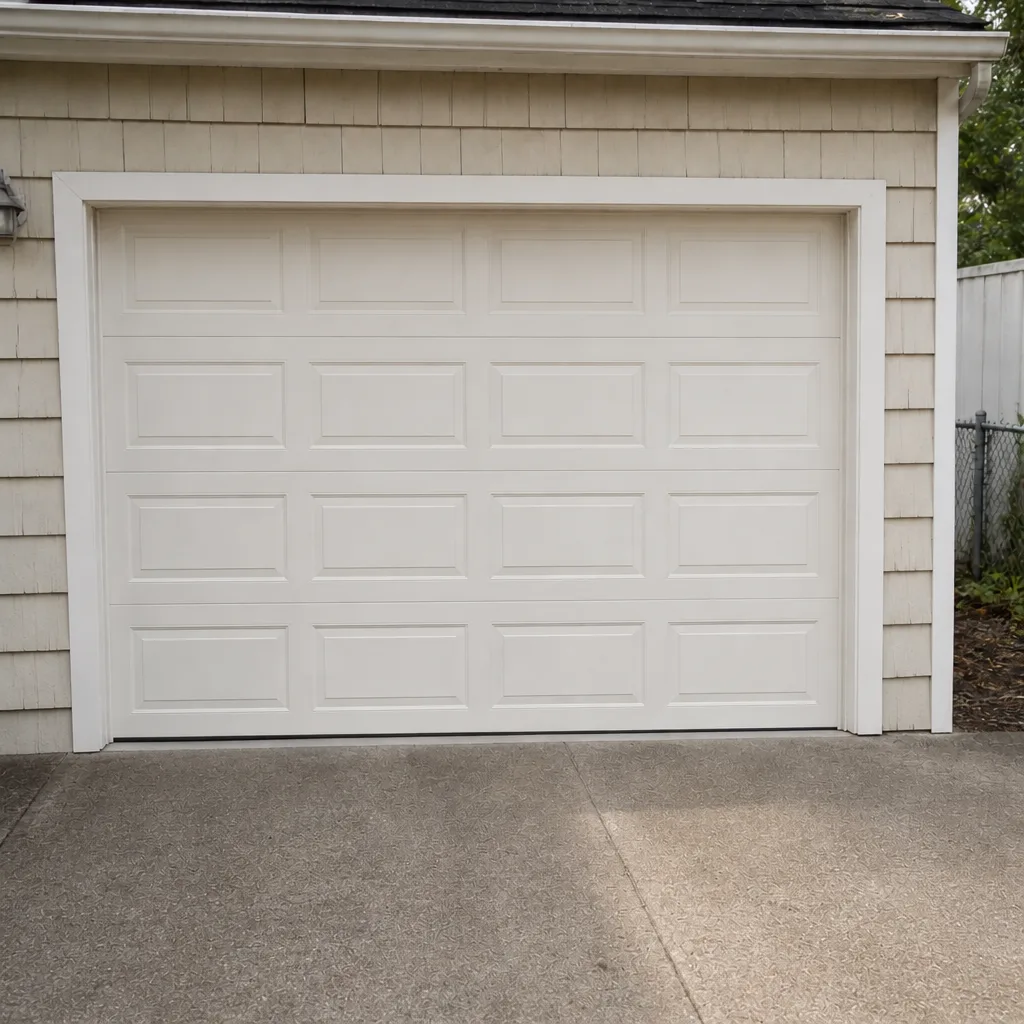 After
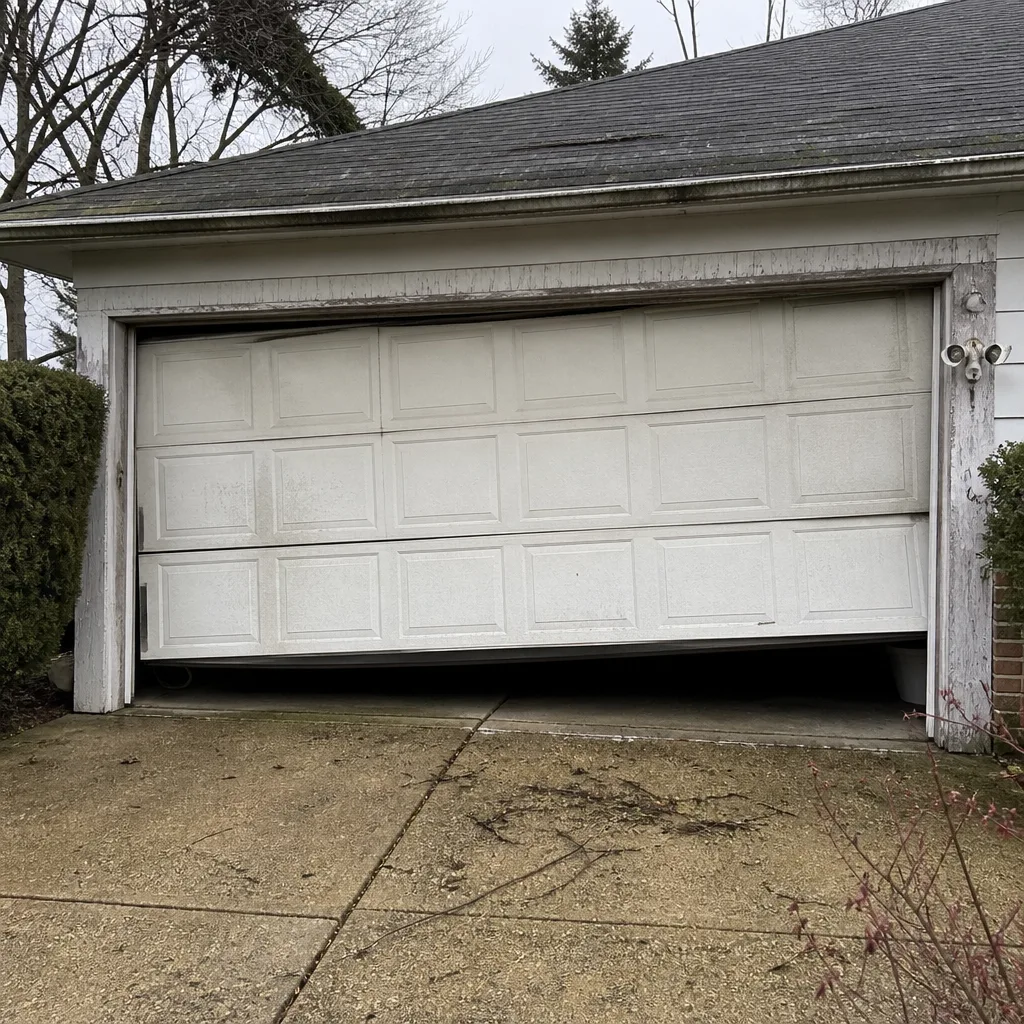 Before
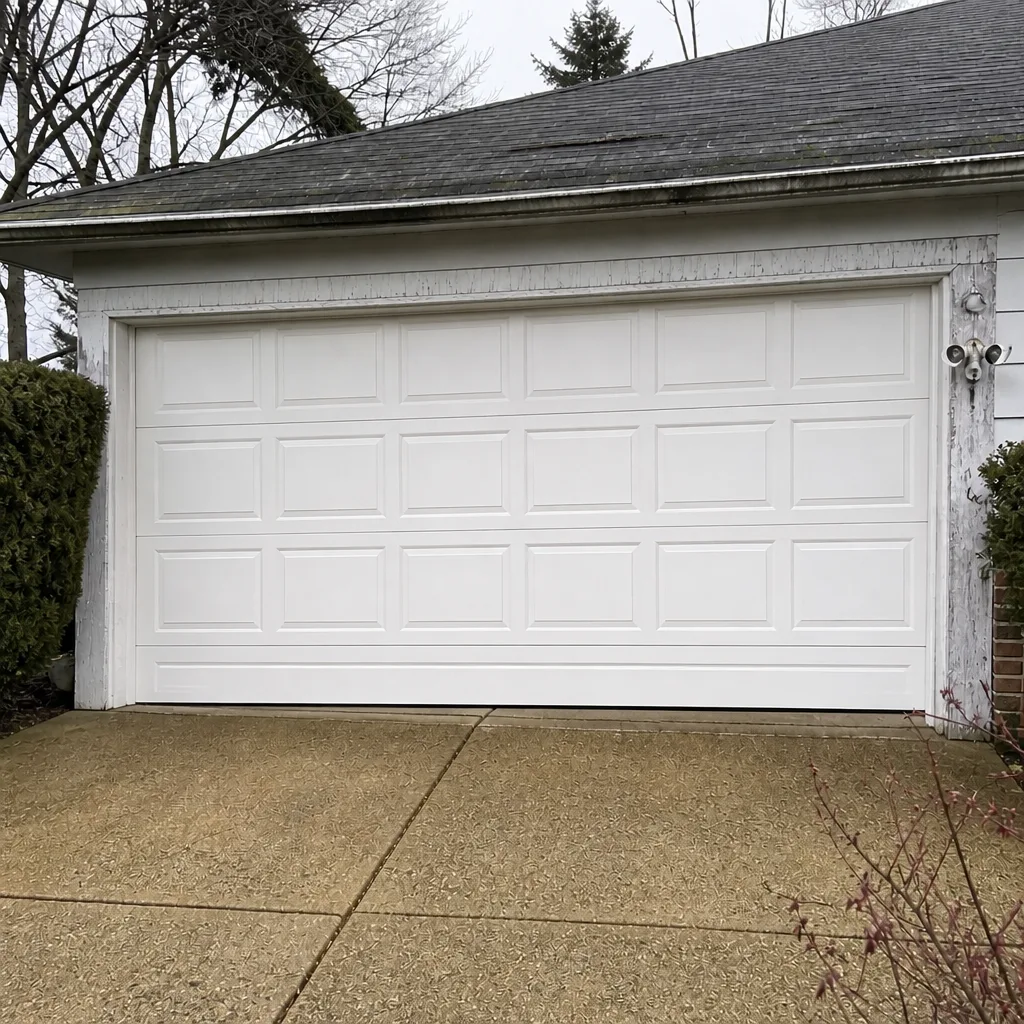 After
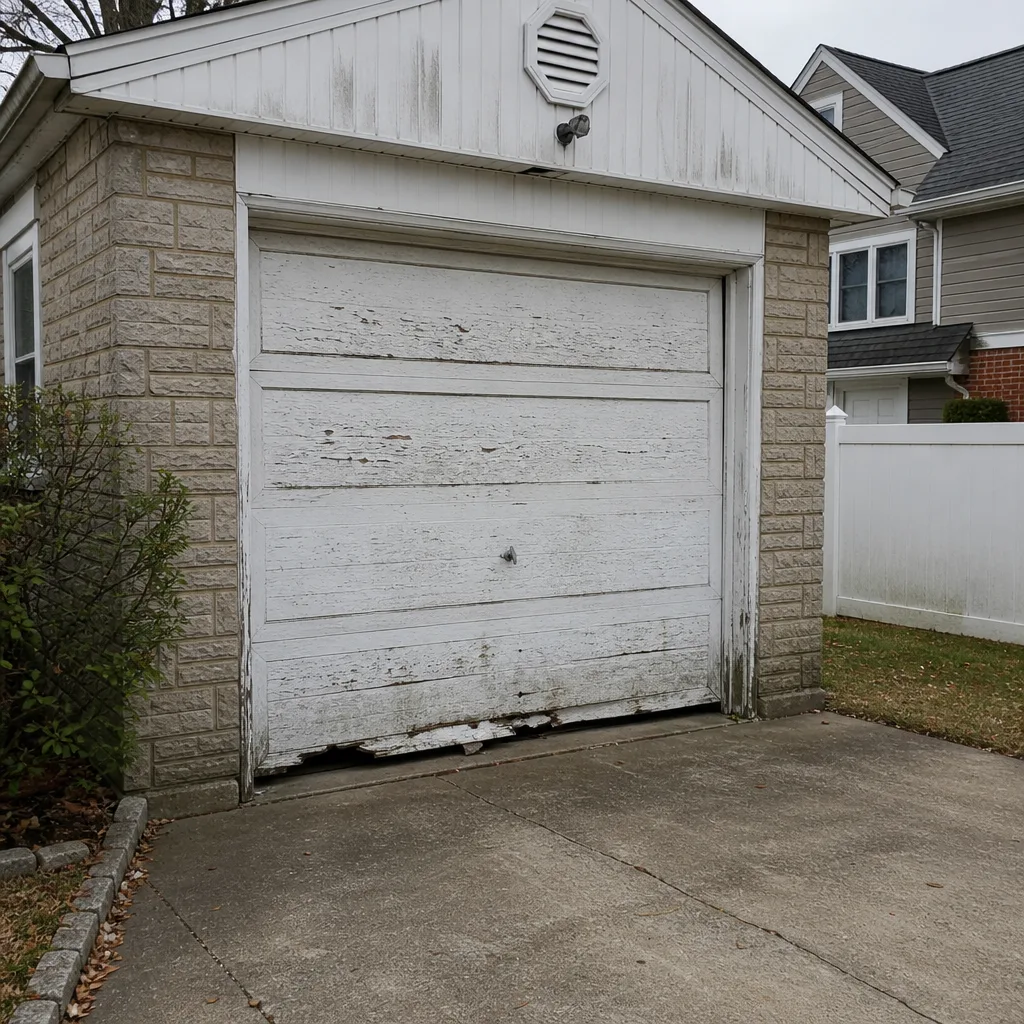 Before
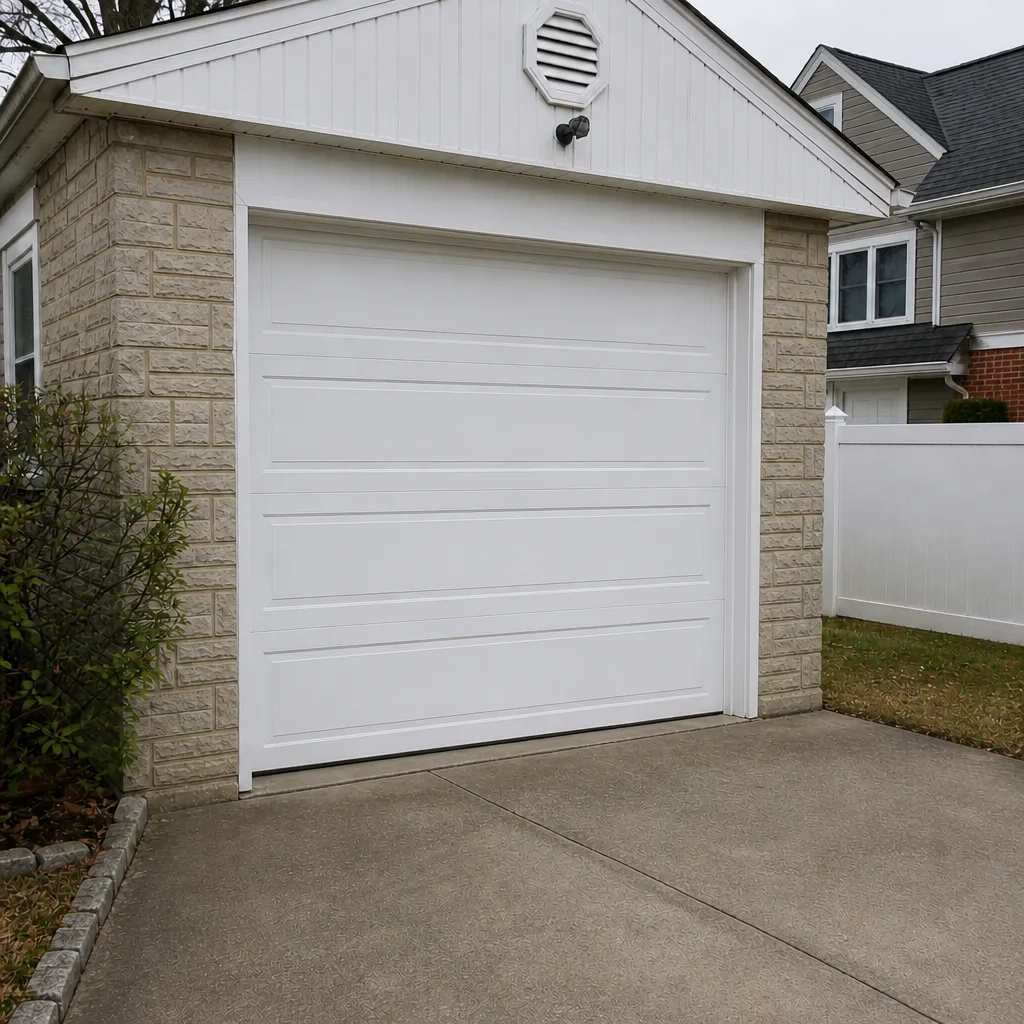 After
When to Call a Professional
Call us when the warning sign is on the stop list, when an uneven door gets worse over a few cycles, when the opener runs but the door doesn’t move, when a spring shows a gap, or when you’re simply not sure which of those you’re looking at. That last one matters more than homeowners think – a trained ear on the phone or at the door saves a lot of guesswork. Valley Stream Garage Door Repair Pros offers free estimates in Valley Stream – call (833) 508-9959. We diagnose, explain what’s wrong, and give you a written price before any work begins, so there are no surprises when the invoice arrives. Same-day service and fast dispatch are available for emergency calls, and the price is quoted and agreed before a technician starts.
Frequently Asked Questions
The most common warning sign we see is a door that has started grinding or squealing during operation, usually from worn rollers or dry hardware. It’s also the most forgiving sign, so it’s often the one homeowners wait on the longest. Call (833) 508-9959 for an exact quote on a repair diagnosis – estimates are free.
No. A door with one broken spring is running on uneven tension, and the opener is being forced to do work it isn’t designed for. Stop using the door and call for same-day spring service.
An uneven door is almost always a cable that has slipped, an extension spring that has lost tension, or a track that has shifted. It’s a mechanical fault, not a cosmetic one. Call (833) 508-9959 and we’ll diagnose it – the written estimate comes before any work starts.
That usually means the opener’s internal gear has stripped or the door’s torsion spring has failed, and either way the motor is spinning against no load. Don’t keep pressing the button. Call for a diagnosis.
Yes. Torsion and extension springs are under extreme tension and can cause serious injury if they release. Spring replacement is a trained-technician job, and we treat it as a specialized service for exactly that reason.
We’re factory-familiar with the major garage door and opener brands, including LiftMaster, Chamberlain, Genie, Clopay, Amarr, Wayne Dalton, Craftsman, and Raynor. Odds are we know the system on your door. Call (833) 508-9959 for a free estimate.
The Bottom Line
Your garage door tells you what’s wrong before it fails – you just have to know the language. Grinding, rattling, and squealing are usually schedule-a-repair signs. Scraping, popping, an uneven door, a slack cable, a gapped spring, or an opener that runs without moving the door are stop-operating signs. Valley Stream weather makes both lists more likely in a cold snap or a wet stretch, and older Valley Stream garages tend to show the warnings earlier. Check your door’s sounds and alignment at the start of every season, stay away from springs and cables, and call a specialist when the sign is on the stop list. If you’re not sure which list you’re on, call us – it’s the fastest way to get an accurate diagnosis.
Written by the team at Valley Stream Garage Door Repair Pros.