Last updated November 23, 2026
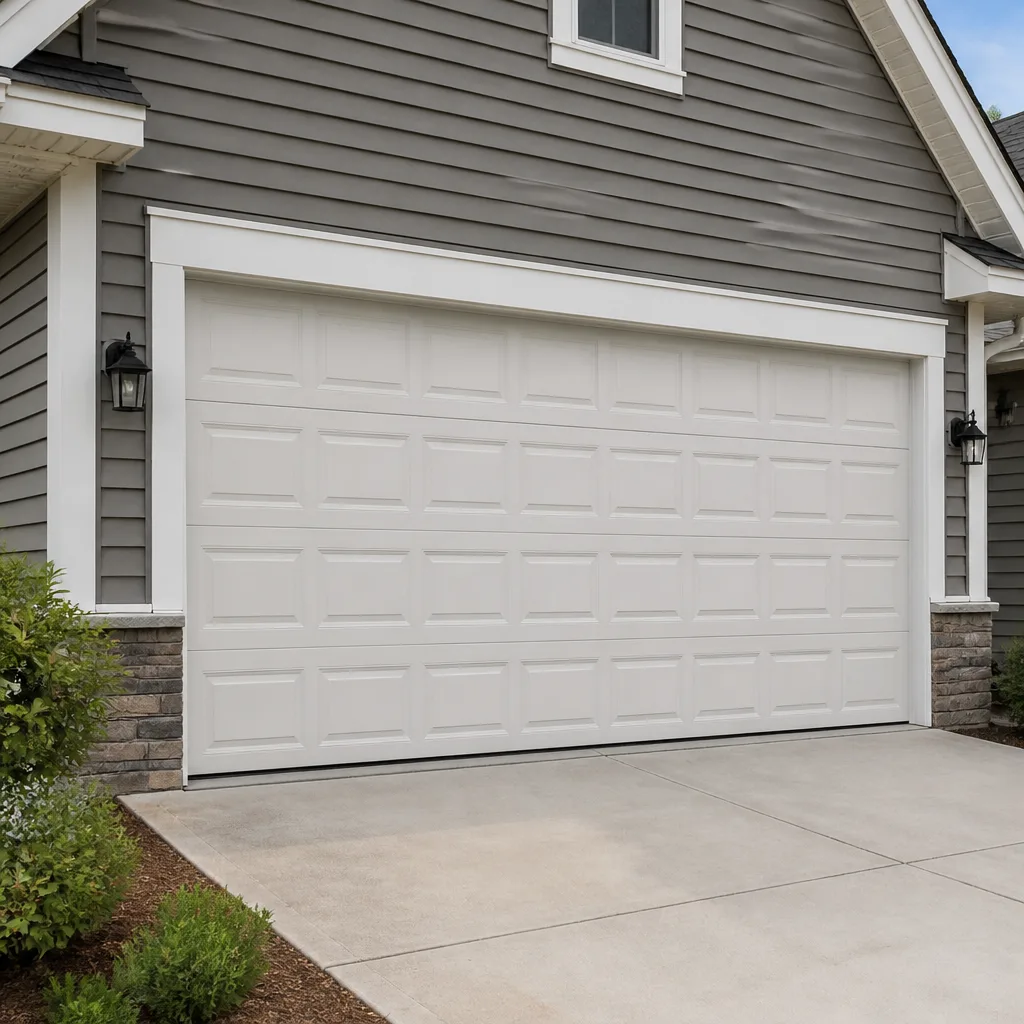 Raised-panel steel
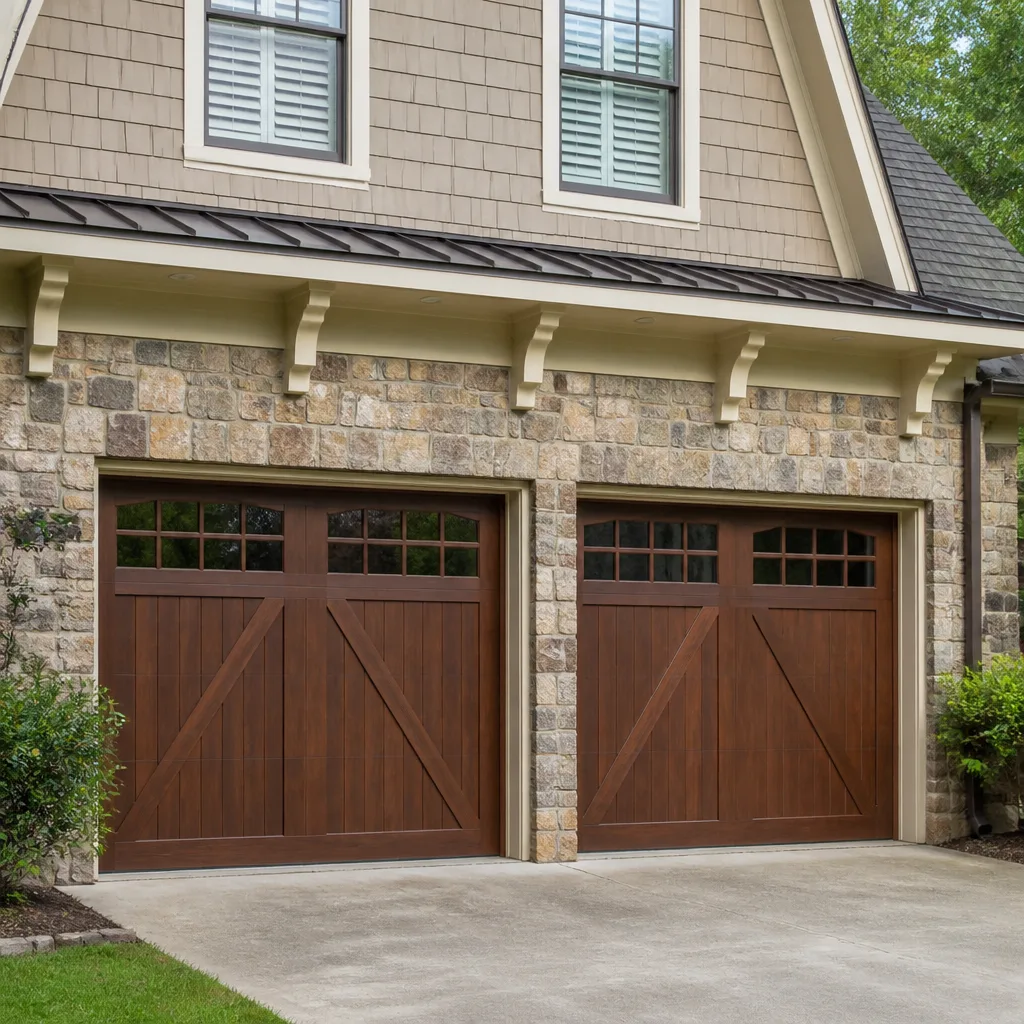 Carriage house
 Modern flush
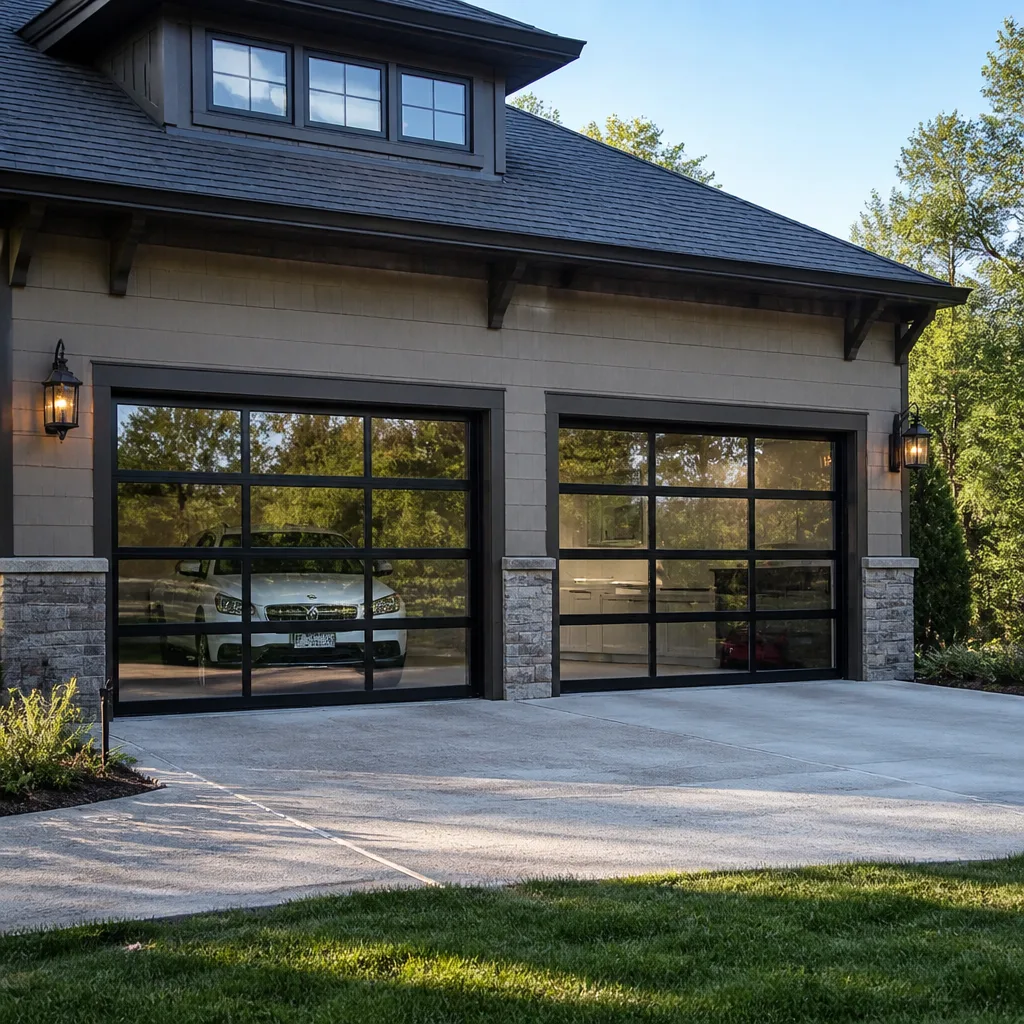 Full-view glass
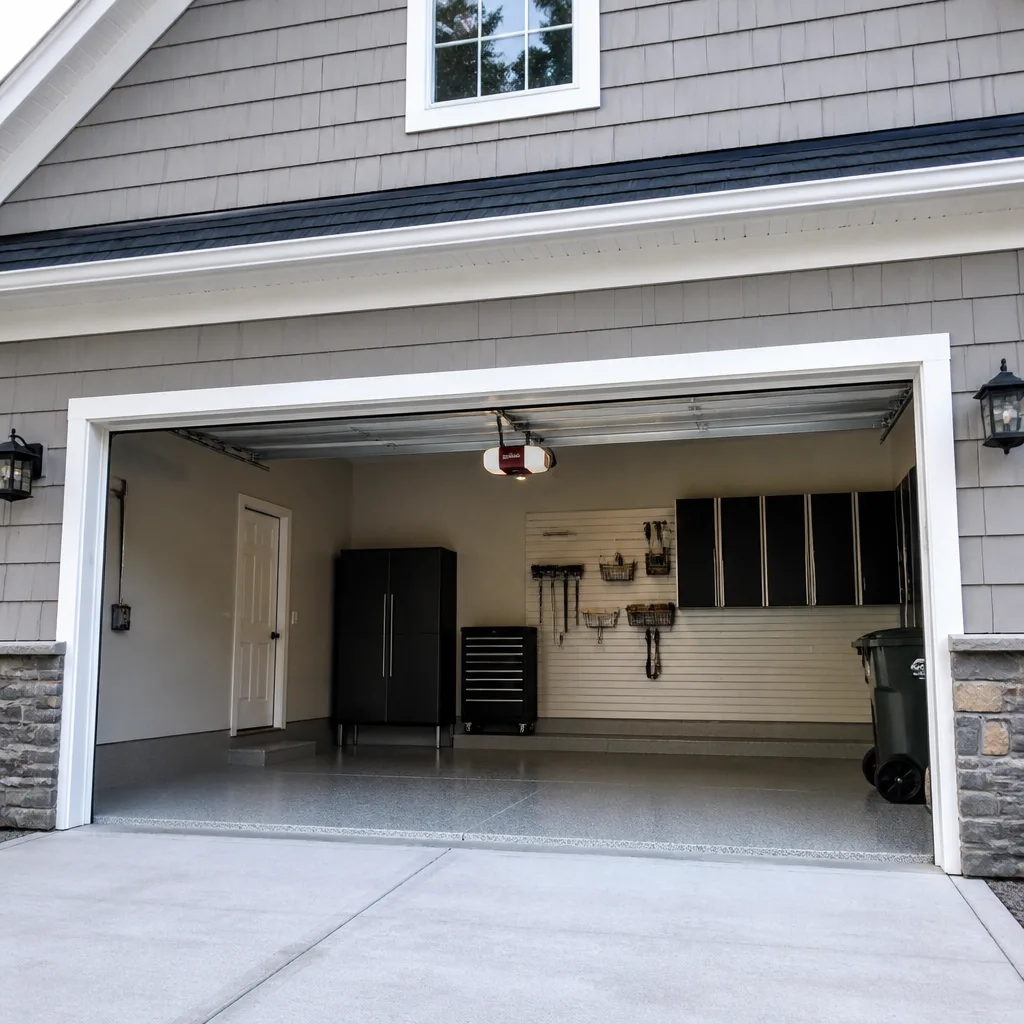 LiftMaster openers
 Chamberlain openers
Full 25-point door and opener safety check with every visit - springs, cables, rollers, tracks, and your LiftMaster or Chamberlain opener included
You get a price before we start. It does not change when the pro arrives.
Get your free estimateGarage Door Emergency Preparedness Guide for Valley Stream Homes
Most homeowners treat a garage door problem as an inconvenience. In Valley Stream, it’s closer to a small-scale emergency. During Superstorm Sandy, thousands of Long Island garage doors were either blown in or jammed shut by debris, and homeowners who couldn’t manually release their openers were locked in or out of their own houses for days. The same pattern shows up in every nor’easter that rolls through Nassau County. A door fails exactly when you can’t drive around it, and the fix that should take two hours stretches into two days when nobody knows how to react. This guide is our attempt to put the plan in your hands before you need it. You’ll learn the manual release procedure, how to stabilize a failed door without making it worse, the pre-storm checklist for Long Island wind events, how to spot scam operators after a weather event, and what to photograph for an insurance claim. If you take one thing from it, make it the manual release. It’s the single trick that turns a locked-in garage into a manageable afternoon.
Quick Answer
Garage door emergency preparedness in Valley Stream means three things: knowing how to manual-release your opener from inside the garage, knowing which failures (broken spring, off-track door, snapped cable) require a professional before anything else is touched, and keeping a short pre-storm checklist that catches weak hardware before a nor’easter or a repeat of Sandy conditions finds it for you. The manual release is the one operation every adult in the household should be able to perform. Everything involving springs, cables, or a door off its tracks is a professional call.
Styles & brands we work with
- Raised-panel steel
- Carriage house
- Modern flush
- Full-view glass
- LiftMaster openers
- Chamberlain openers
Table of Contents
- How do you manually release a garage door opener?
- Why a broken spring is a stop-and-call situation
- How do you secure a door that’s off its tracks?
- Pre-storm checklist for Long Island wind events
- What to do when the power is out and the door won’t move
- How to find a legitimate emergency technician after a storm
- What to document for an insurance claim
- Maintenance that prevents most emergencies
How do you manually release a garage door opener?
You pull the emergency release cord, and the door detaches from the carriage and moves by hand. That’s the mechanism. The rest is knowing when the door is safe to move, and when it isn’t.
Every residential opener sold under Chamberlain, Genie, LiftMaster, or Craftsman uses the same basic release system: a red or orange cord hanging from the trolley that rides the opener rail. Pull it downward and toward the door (not sideways, not at an angle) and the carriage disengages. On most brands, one firm pull is enough. If the cord feels jammed, don’t yank. A hard yank can bend the trolley arm and turn a simple release into a repair.
Here’s the sequence we walk Valley Stream homeowners through on the phone when their car is trapped inside:
- Stand outside the door, not under it. If the door is open, close it fully first. If it’s closed, stay clear of the panels.
- Find the release cord. It hangs from the opener trolley, usually 6 to 12 inches below the rail. On some Genie models it’s a short handle rather than a cord.
- Pull firmly downward and slightly toward the door. You’re disengaging the carriage, not fighting the door.
- Test the door by hand. Lift it about a foot. A properly balanced door stays put. A door that slams back down or feels unusually heavy has a spring problem. Do not raise it further.
- Lift slowly and fully. If it moves without resistance, raise it, and the car can come out.
- Leave the door closed until the opener is re-engaged. Don’t leave a released door up overnight. The moment someone pulls it down, the opener won’t catch it on the next cycle.
To re-engage, close the door fully by hand, then run the opener once. The carriage usually re-latches on the next cycle. If it doesn’t catch, the trolley arm may need adjusting, which is a quick professional visit rather than a homeowner fix.
Here’s the condition we want emphasized. If the door is unusually heavy, if the cord won’t move, or if the door is visibly off its tracks, stop. Do not use the manual release. A door with a broken spring can drop several hundred pounds onto anything under it. Springs are under extreme tension even when the door looks static, and the release doesn’t relieve that tension. Call garage door spring repair and let a technician handle the diagnosis.
Why a broken spring is a stop-and-call situation
A torsion or extension spring carries the weight of the door, and when one fails, the door can weigh upward of two hundred pounds with nothing counterbalancing it. That’s why a snapped spring is a “call, don’t touch” failure.
Springs fail with a loud bang that Valley Stream homeowners often describe as a gunshot from inside the garage. That’s the sound of the coil breaking under tension. Once it does, the door is unsafe to lift by hand, and the opener should not run either. Every cycle on a broken spring adds strain to the opener motor, the cables, and the tracks, and it’s how a $200 spring replacement turns into a much larger repair. The broken spring garage door repair call is the correct next step.
What you might notice before it breaks:
- A visible gap in one of the torsion coils above the door, or a visibly stretched extension spring on the side track
- A door that lifts a few inches and stops hard, or feels unusually heavy at the bottom of travel
- A loud snapping or popping sound you hear from the other side of the house
- A door that slams down instead of lowering smoothly
- One side of the door rising faster than the other
Any of those signals warrants a technician inspection before you cycle the door again. Spring replacement is a named service for us because of how frequently it turns into a safety call, and because it’s the job where shortcuts cause the most injuries. A technician with the right winding bars and the right feel for the door’s balance point can do it in a couple of hours with the correct springs matched to the door weight.
How do you secure a door that’s off its tracks?
You leave it alone, secure the perimeter, and call. An off-track door is the one failure where the homeowner’s best move is almost always to stop.
Doors come off their tracks during a storm when wind pressure deforms the door panels, or after a car bumps the door from inside, or when a bent roller finally jumps over the track lip. Once a roller is out of the track, the door has lost its guide, and forcing it up or down can drop the whole panel assembly. It can also tear the track off the wall header. Neither is a repair you want to schedule mid-storm.
- Keep the door where it is if it’s stable. Don’t lift it, don’t close it, don’t run the opener.
- Block the doorway from inside with something heavy or non-movable if the door is open and the garage is accessible from outside. A car left in the garage will not stop a person from walking up to a partially open door.
- Photograph the door exactly as it sits. Note the angle of the rollers, the position of the tracks, and any panel damage. This becomes your insurance documentation.
- Turn the opener off at the wall switch or the breaker so nobody cycles it by reflex.
- Call an emergency technician and describe the state of the door. A trained technician will arrive with the right tools rather than guessing.
On a broken spring with the door already closed and stable, you can usually leave it closed and schedule the repair. On a door that’s off-track and partially open, that’s the case where we want the homeowner to call rather than wait. Emergency response is a core part of our work in Valley Stream for exactly this scenario: a stuck door is a security exposure for the house, and it’s not something we want anyone living with for two days.
Pre-storm checklist for Long Island wind events
Long Island wind events hit Valley Stream the same way they’ve hit it for decades: fast, from the east or southeast, often with an extended period of gusts. The stress isn’t the average wind; it’s a door that’s already a little weak finding out exactly how weak it is.
Run this checklist when a storm is forecast and you have a day to prepare:
- Look up at the door panels. Any dent, warp, or sign of separation between panels means the door’s structural stiffness has already been compromised. Wind finds that gap.
- Check the hinges and roller brackets. Loose screws should be tightened. Stripped screw holes, which show up on older doors, are worth a service call before the storm, not after.
- Test the balance. With the door released from the opener, lift it halfway. It should hold. A door that drifts down has lost spring tension and should be inspected.
- Inspect the weather seal along the bottom. A curled or torn seal lets wind pressure under the door, which is exactly how panels get lifted and bent.
- Clear the driveway of loose objects. Trash cans, garden tools, sporting equipment, and folding chairs are the debris that jams doors open during storms. Move them inside the garage or into the house.
- Park one car outside the garage if you can. If the door fails, you still have mobility.
- Put a flashlight and the phone number of a garage door company in the garage, not just on your phone. During a storm, the door is the last place you want to be searching for contacts.
For a low-profile hurricane-rated door on a modern Valley Stream home, most of these checks take 15 minutes. For an older door with a long service history, they’re worth running twice. When the forecast turns severe and you’ve found a problem you can’t safely address (a ticking spring, a bending panel), the right choice is to leave the door closed and secured rather than to try to reinforce it yourself. Wind pressure is a calculation, not a hardware problem, and it’s better to leave a door down and unlocked than to have it lifted or torn off its tracks.
What to do when the power is out and the door won’t move
You use the manual release. A power outage is the most predictable emergency in the garage door world, and the manual release exists specifically for it.
Most openers in Valley Stream homes have a battery backup or release system. Chamberlain and Genie both sell models with battery backup, which keeps the opener functioning for at least a few cycles during an outage. If your opener has a battery, check it annually, replace the battery on the manufacturer’s schedule, and it will do its job when the grid goes down. If yours doesn’t have backup, the release cord is your answer, with the same safety caveats as above.
For a door that’s closed and stable and a car trapped inside, the release cord gets you out. For a door that’s already sitting at a strange angle or that won’t lift more than a foot by hand, don’t release it, and don’t force it. Call a technician. We handle opener-side troubleshooting and door-side failures as the same visit, so when the power comes back and your opener is behaving oddly, a garage door opener repair visit can sort out a fried circuit board or a corrupted limit switch in one trip. If the opener is older and due for replacement, we also handle new garage door installation work and matching opener installs, which is often the more sensible outcome than repeated repair on a unit that’s already given you a decade of service.
How to find a legitimate emergency technician after a storm
After a major weather event, unlicensed operators flood Long Island, and garage doors are a favorite target because a stuck door looks like an easy payday to a scammer with a drill and no experience.
The pattern we hear about from Valley Stream homeowners is consistent. A truck shows up unmarked. The technician quotes a number on the spot that’s higher than the phone conversation suggested. The work gets done in a hurry, sometimes with the wrong springs, sometimes with a door left out of balance, and the “warranty” turns out to be a phone number that stops answering in a week. Another version: they insist the whole door needs to be replaced when a spring and a tune-up is the actual fix.
Signs of a legitimate technician:
- They give you a business name, a phone number, and a clear scope of work before they start.
- They quote a price before any work begins, and the price is the price when the invoice arrives.
- They know your brand. A garage door specialist recognizes a Clopay, Amarr, or Raynor door on sight and knows the opener brand by the wall control and rail. Someone who has to run out to the truck to look it up is learning on your time.
- They show up prepared with springs in the common sizes. Emergency service doesn’t mean improvisation.
- They’re willing to put the diagnosis in writing, which we do routinely for insurance purposes.
The shortcuts to avoid: anyone who quotes a price without seeing the door, anyone who insists on payment before the diagnosis, and anyone who tells you to replace the whole door for a failed spring. A good technician will diagnose and repair first. When you want a second opinion, our Valley Stream Garage Door Repair Pros team will give you one at no charge and walk through what’s actually failing.
What to document for an insurance claim
For a storm-damaged garage door, insurers typically want three things: the damage documented in photos from before any repair, a timeline of when the damage occurred, and an itemized repair or replacement estimate from a licensed professional.
The photos matter more than most people realize. Adjusters look for specific patterns on garage door claims: bent and separated panels along the wind-facing side, dented panels consistent with impact, torn or missing weather seals, and track deformation that wouldn’t occur from normal use. A door that was blown in during a storm shows damage patterns distinct from a door that failed from age, and the photos are what tell the difference.
Here’s what to capture, in order:
- Wide shots of the whole door and the garage front from the driveway, in daylight if possible.
- Close-ups of each area of damage, one photo per panel or track section.
- The interior side of the door, showing how the panels sit against the tracks.
- The opener and rail if there’s any sign the carriage or trolley was involved.
- The garage interior and floor, to show any water intrusion or debris.
- A dated note of when you first noticed the damage and whether the door operated between the storm and that point.
- Your written repair estimate, which any repair visit should produce for you.
One detail worth raising with the adjuster: if the door is older and the damage is repaired rather than replaced, ask whether the policy covers a partial replacement or a full panel replacement. Sometimes a partial repair is the right call, and sometimes a replacement is what the insurer will cover. Either way, the documentation you produce in the moment is what drives the outcome.
Maintenance that prevents most emergencies
Most of the emergencies we respond to in Valley Stream had a warning sign at least a week earlier. Monthly inspection prevents more garage door problems than any repair.
The five-minute monthly check:
- Look at the springs above the door. Any gap, any stretch, any visible bend means stop and call.
- Lubricate the hinges, rollers, and the torsion shaft bearings with a garage door lubricant (not WD-40, which is a solvent rather than a lubricant). Once every few months is enough.
- Test the balance with the door released. It should hold at halfway.
- Test the safety reverse. Place a piece of wood on the floor directly under the door and cycle the opener. The door should reverse on contact and re-open. If it doesn’t, the opener needs a limit adjustment or replacement.
- Inspect the tracks. They should be straight, parallel, and evenly spaced. A bent track doesn’t need a full rebuild, but it does need attention before a roller pops out.
Once a year, or before the storm season, get a technician out for a full inspection. The visit covers the spring tension, cable condition, roller wear, track alignment, opener force sensing, and the safety reverse. It’s the kind of appointment that, in our experience, catches about half the failures before they happen, and it costs nothing compared to a mid-storm emergency call.
Common Mistakes to Avoid
- Using the manual release on a door with a broken spring. The release detaches the opener from the door, but it doesn’t remove the door’s weight. A door with a snapped spring can drop fast and hard the moment it’s released, and the release cord won’t warn you.
- Forcing a stuck door. Valley Stream doors get stuck from a lot of reasons: a bent roller, a misaligned track, a broken cable. Forcing it up or down compounds the damage every time. Call for a diagnosis.
- Ignoring a slow-responding opener. A Chamberlain or Genie opener that hesitates is usually trying to tell you its force sensor is out of adjustment or its logic board is failing. Waiting for it to fail on its own is how a $150 limit switch turns into a $600 opener replacement.
- Using the wrong lubricant. White lithium grease and WD-40 don’t belong on garage door tracks. The grease gummed up by summer humidity, and the solvent strips the rollers dry. Use a garage door-specific spray and leave everything else in the toolbox.
- Hiring the first truck after a storm. Weather events bring out unlicensed operators on Long Island, and a garage door quote on the spot is not the same as a written estimate. Get the diagnosis, get the number in writing, then decide.
- Skipping the post-storm inspection. After every significant wind event, walk the door. Panel flex, seal gaps, and track bends show up the same day. They’re cheap to fix then and expensive two weeks later.
- Waiting to call when a car is trapped inside. A trapped car is the most common call we get in Valley Stream, and the fix is frequently 45 minutes of manual release and diagnosis. That’s a good time to call, not a reason to wait until morning.
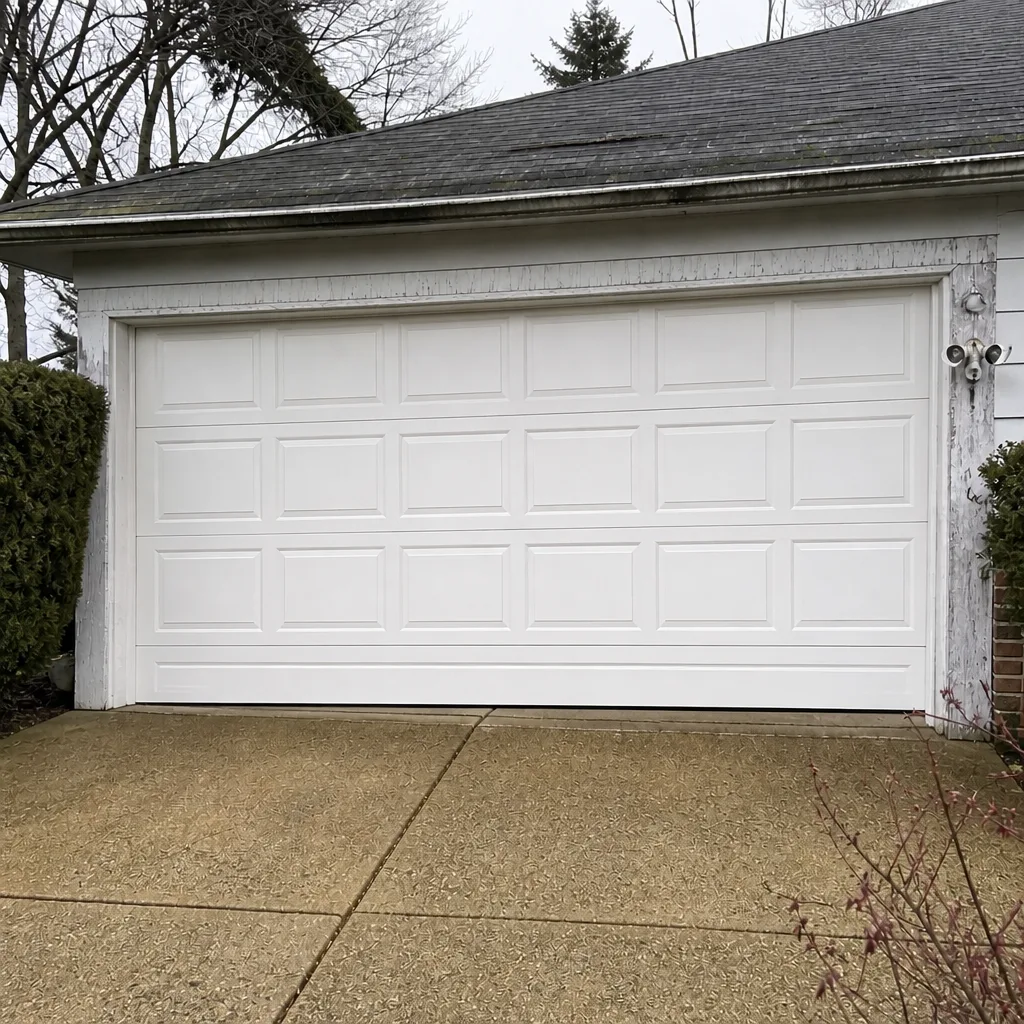
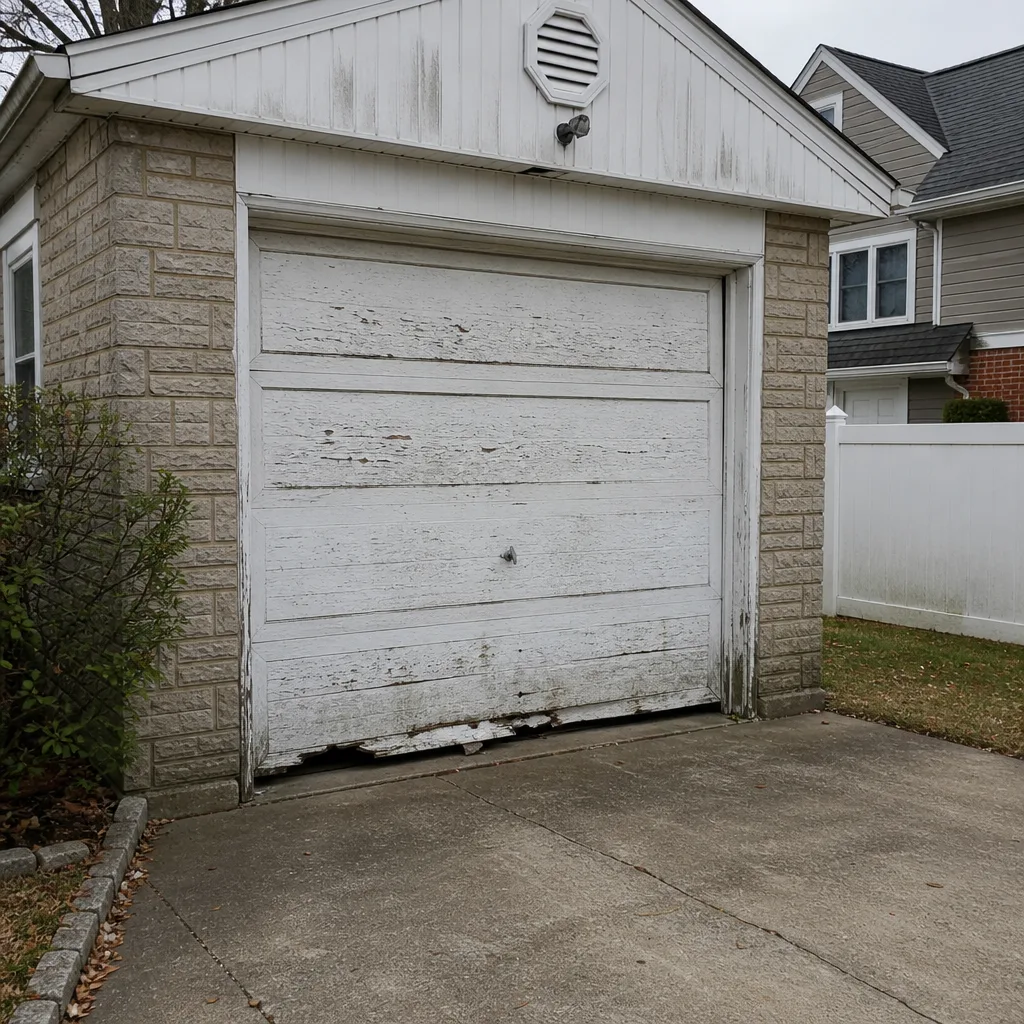
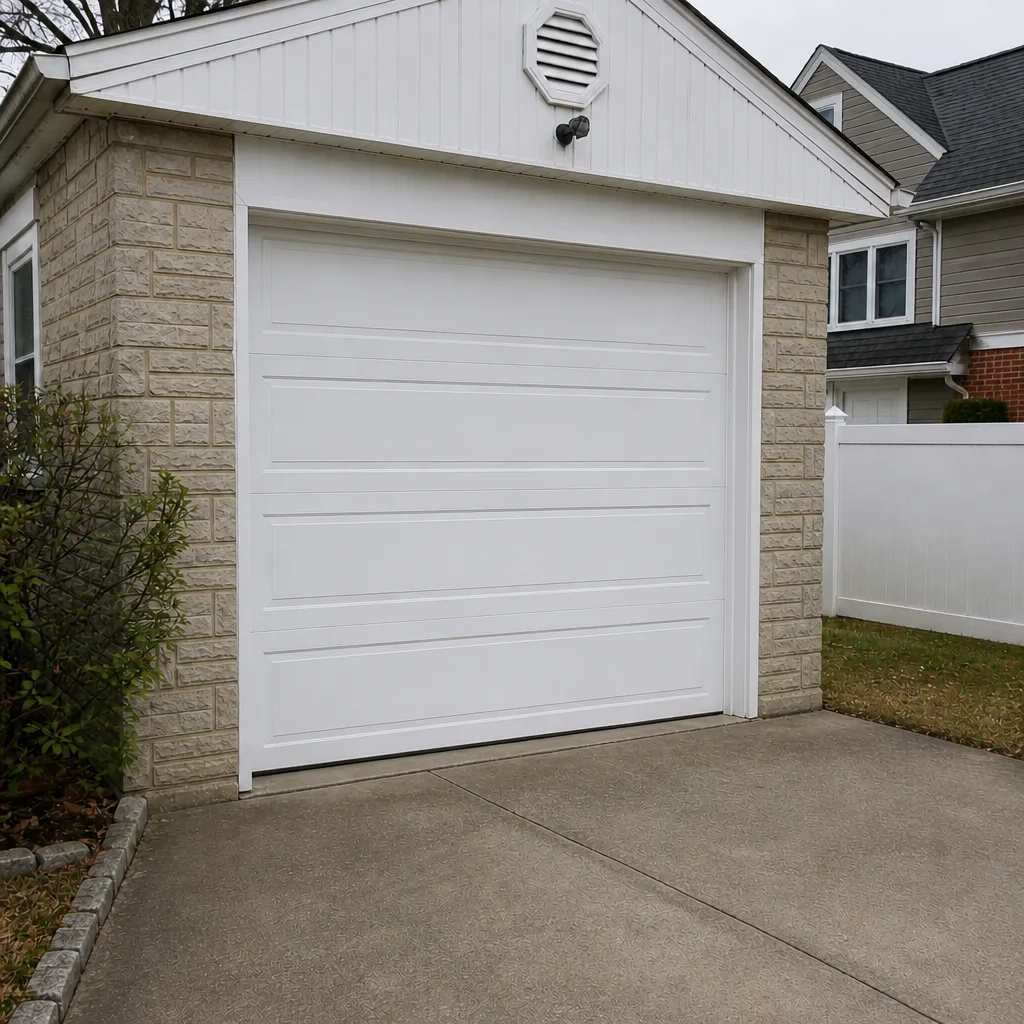
See the difference
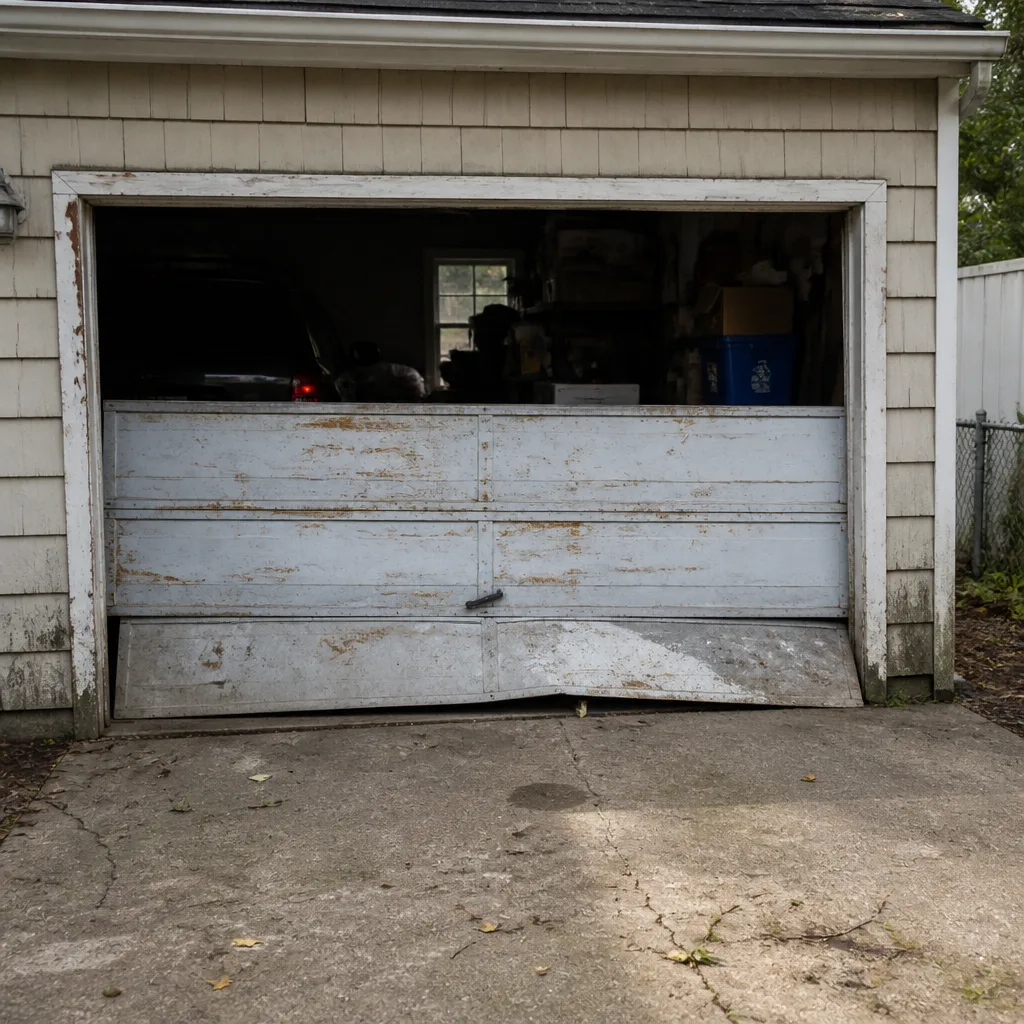 Before
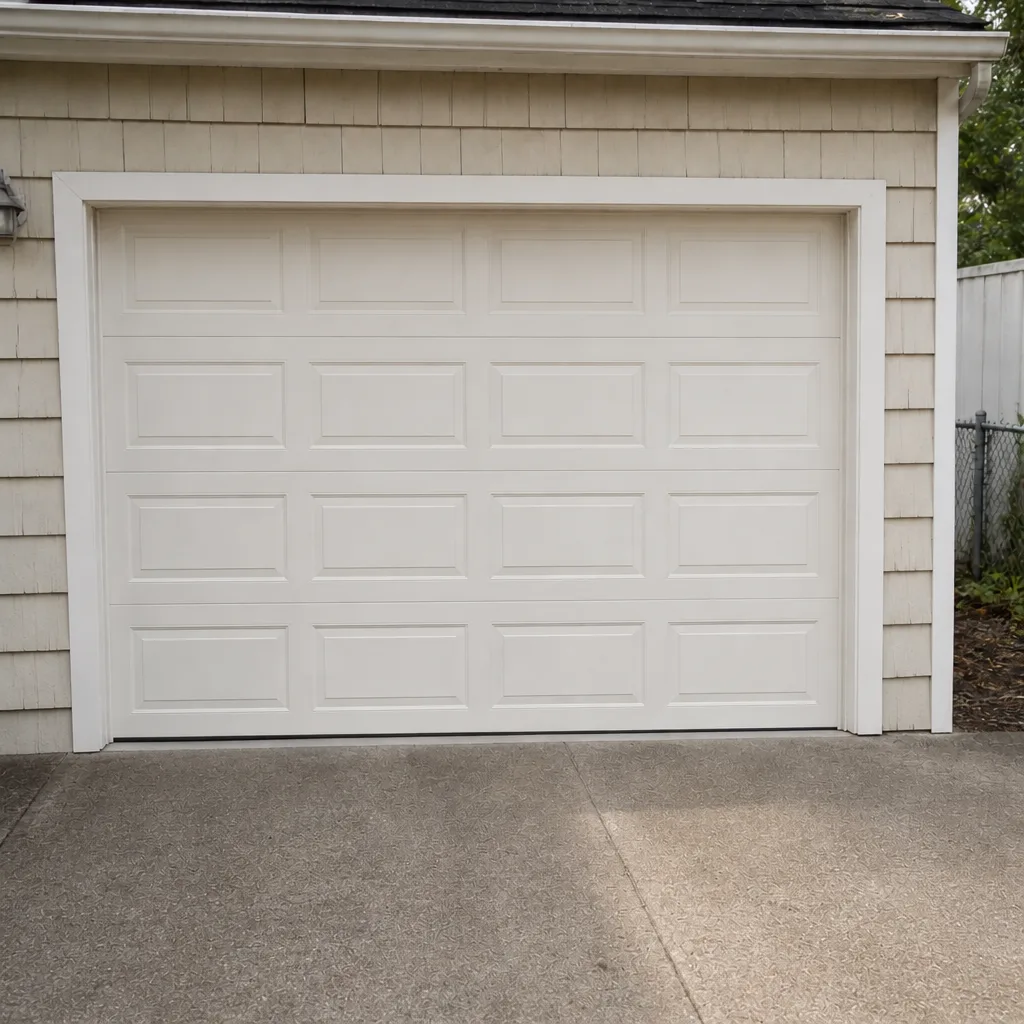 After
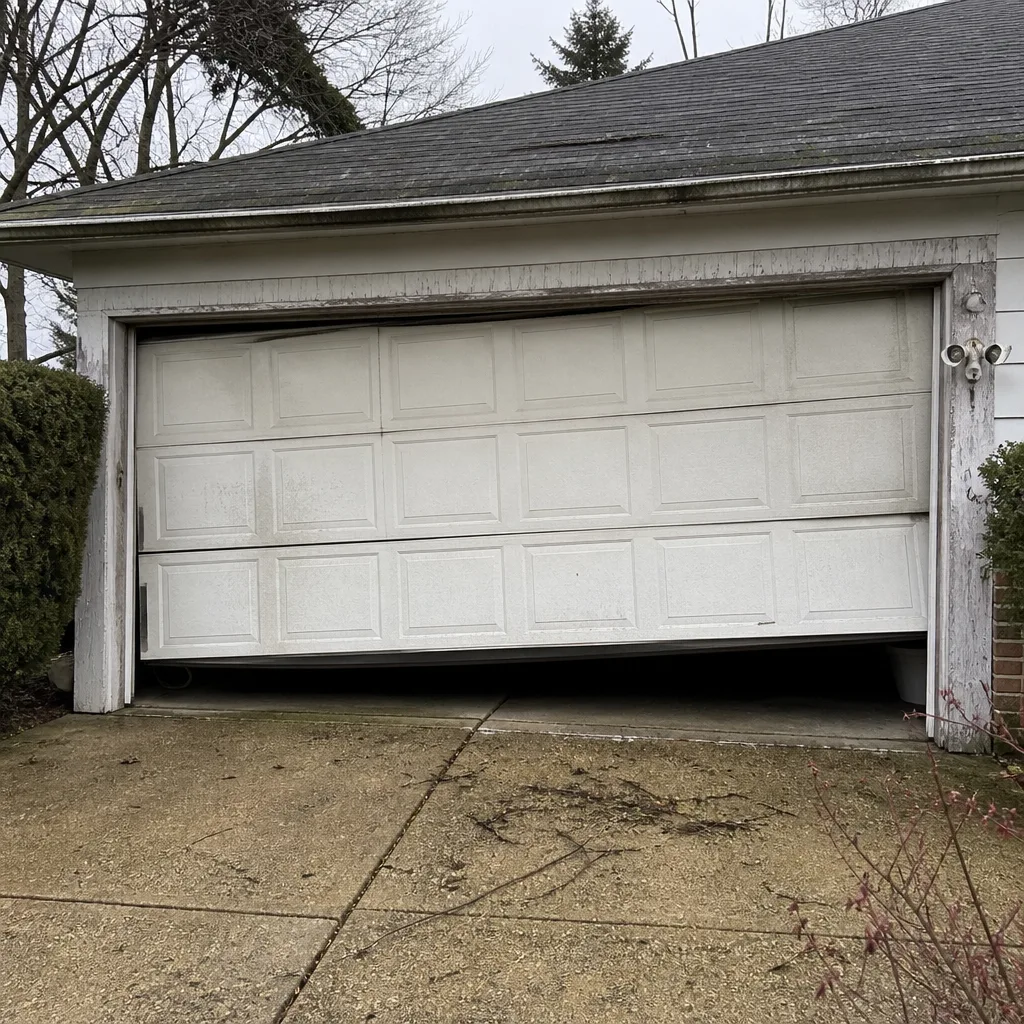 Before
 After
 Before
 After
When to Call a Professional
Call when the spring has visibly snapped or the door feels unusually heavy, when the door is off its tracks or partially open and unstable, when a cable is visibly broken or hanging, or when the opener runs but the door doesn’t move. Also call if the door comes down on an obstruction and doesn’t reverse, or if you hear grinding or popping from the opener rail. Those are the failures where a trained technician with the right tools and the right procedures makes the difference between a repair and a hospital visit. Valley Stream Garage Door Repair Pros offers free estimates in Valley Stream and handles emergency service as a core part of our work. Call garage door spring repair for a snapped spring, garage door opener repair for opener failures, or the main line at (833) 508-9959. Our technicians have up to 9 years of experience, and the local pro is licensed and insured as their state requires.
Frequently Asked Questions
Pull the emergency release cord hanging from the opener trolley downward and slightly toward the door, then lift the door by hand to test it. If the door holds at halfway it’s safe to move; if it’s heavy or slams down, stop and call a technician. Most Chamberlain, Genie, LiftMaster, and Craftsman openers use this same release mechanism, and the operation takes about 30 seconds. Call (833) 508-9959 if you can’t find the cord or the door won’t budge after release.
Use the manual release to disengage the door from the opener, then lift the door by hand. That’s the fastest way to get the car out. If the door is heavy, off its tracks, or won’t lift more than a foot, don’t force it, because a broken spring or cable is the likely cause. Call (833) 508-9959 for same-day emergency service in Valley Stream; a free estimate covers the diagnosis.
Yes, in the sense that it’s unsafe to operate the door until it’s repaired. A broken spring means the door is carrying its full weight, and running the opener can damage the motor or drop the door. Don’t try to lift it by hand. Call for garage door spring repair, and we’ll get a technician out with the right winding equipment and matched springs. Free estimates, written before work starts.
Spring repair typically runs $180 to $340 for a single spring, and most doors use a matched pair that costs about twice that. Opener repairs generally run $150 to $450 depending on the part. Every job is quoted in writing before we start, and the price on the quote is the price on the invoice. Call (833) 508-9959 for an exact quote, free of charge.
You can keep the door in place and keep the opener switched off, but don’t attempt to move the panels or re-seat the track yourself. An off-track door is unstable, and lifting a panel can bring it down on you or pull the track off the wall. Block access from the inside if you can, photograph the position, and call (833) 508-9959. A technician can typically stabilize the door in one visit.
Photograph the entire door from the driveway, plus close-ups of each damaged panel, the tracks, the interior side of the door, and the opener. Write down when you first noticed the damage. Get a written repair estimate from a licensed technician. Adjusters look for specific patterns like bent panels on the wind-facing side, track deformation, and torn seals, so include those in the photos. Call (833) 508-9959 and we’ll put the diagnosis in writing for your claim.
The Bottom Line
Valley Stream garage door emergencies are predictable. The spring that was already stretched, the panel that was already bowed, the track that was already slightly out of line, one strong nor’easter finds the weak point and turns it into a two-day problem. The manual release is the one skill every household should know. The five-minute monthly inspection catches half the failures before they start. The pre-storm checklist catches the other half. And when a door does fail, know who to call and how to tell a legitimate technician from a storm-chasing operator. Free estimates in Valley Stream and written pricing before any work starts. Call (833) 508-9959 to get a technician out.
Written by the team at Valley Stream Garage Door Repair Pros.